
 admin
adminWe are living in a time when the political landscape is no longer defined simply by differences in opinion, but by fundamentally different visions for our values and our future. Understanding this threat requires more than paying attention during election season. It requires awareness and the courage to act, even when it is uncomfortable.
One of the most overlooked dangers exists in small towns and close-knit communities, where relationships run deep, and neighbors know each other by name. While this sense of community is a strength, it can also become a vulnerability, especially in local politics.
Too often, conservatives allow personal friendships with liberal elected officials to cloud their political judgment. An official may be well-liked and even a friend. But likability does not negate the impact of bad policy. When that individual consistently advances liberal agendas – whether on school boards or city councils – the long-term consequences can reshape the very values that define the community.
This is where vigilance becomes essential. Politics is not about personalities; it is about principles. Supporting someone simply because you know them or want to avoid conflict can lead to the quiet erosion of foundational values. Policies affecting education, taxation, public safety, and community standards are not neutral; they carry real consequences that extend far beyond any personal relationship.
There is a psychological dynamic at play that conservatives must recognize. Many on the left are highly effective at leveraging the goodwill and civility of conservatives. They rely on a reluctance to confront, question, or oppose, especially when doing so may create tension within a tight-knit community. The result is an environment where bad policies are tolerated because opposing them is uncomfortable.
As I have stated regarding this dynamic, “To the assailant, submission to his assault is the only path to peace. Opposition to his assault, he deems as divisive.” This highlights how resistance to liberal policy is framed as hostility, while compliance is portrayed as unity. In reality, what is being asked is not unity, but surrender.
When conservatives choose silence over accountability, they enable the very outcomes they claim to oppose. Over time, small concessions accumulate into significant changes that are difficult to reverse.
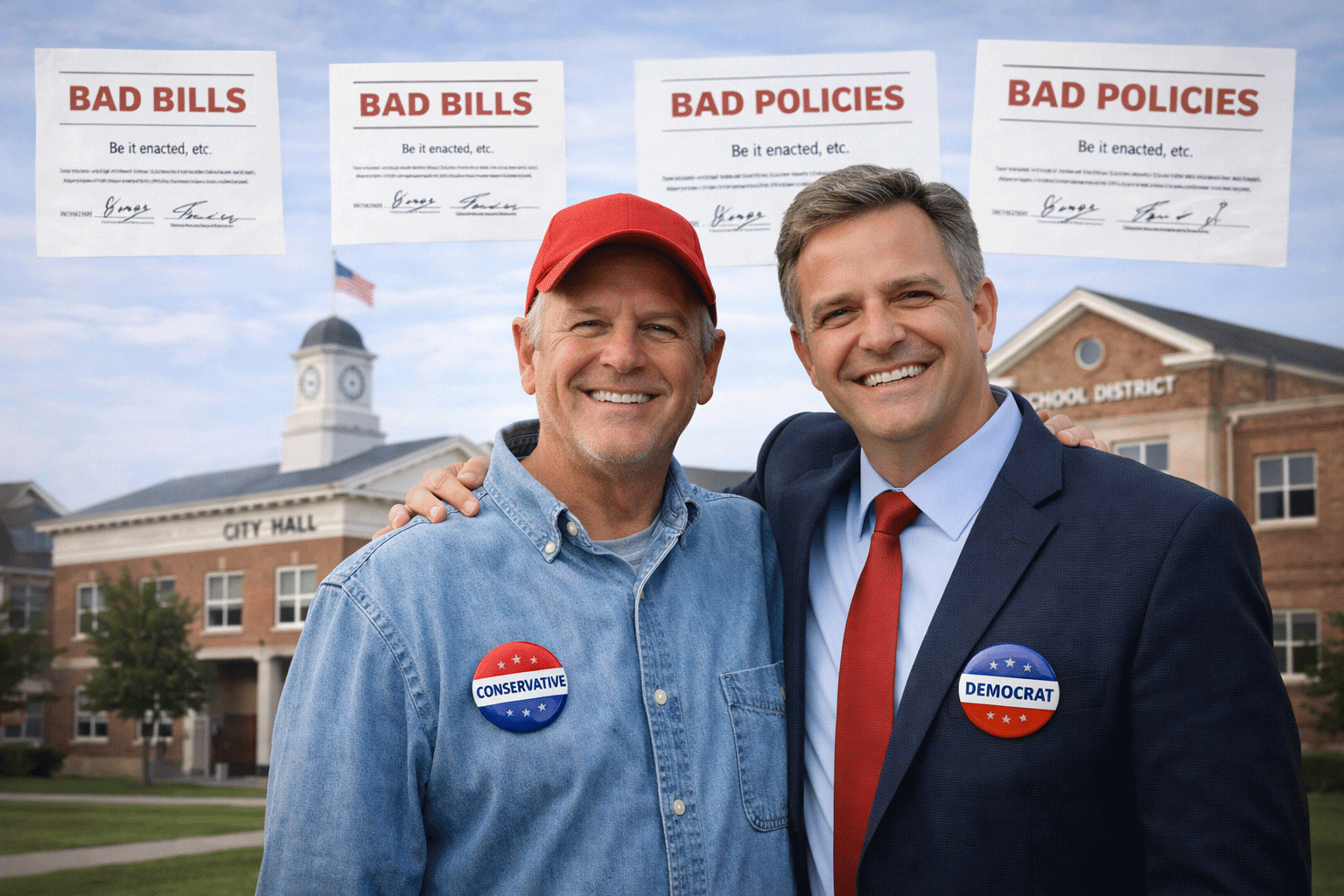
Every vote matters, especially at the local level. Every school board decision, city council vote, and local policy shapes the direction of the community.
Liberal elected officials – some of whom may be your friends – may be advancing policies such as higher taxes, unchecked spending, inappropriate materials in schools, or changing school names to satisfy leftist agendas, all while urging conservatives to “be tolerant.”
This requires a principled approach; respectful in tone, but firm in substance. The goal is not to end friendships, but to separate them from public accountability.
When friendship can no longer excuse bad policy, the conversation may sound something like this: “Johnny, I value our friendship – at church, on our kids’ sports league – but you’re not the right person to represent me in office. Your unwillingness to protect my hard-earned money, remove inappropriate books from schools, and stand up for my conservative values is hurting my family and me.”
If we are to preserve the Christian conservative values we hold dear, we must recognize the threat not as something distant, but as something that can quietly take root in our own backyard. It takes root quietly through unchallenged decisions. Once we see it for what it is, inaction is no longer an option. Otherwise, the conservative values we cherish will not be available to the children of the community.
Author: Joseph Vargas