
 admin
admin
One of the great frustrations in politics is watching elected officials remain in power despite broken promises and poor results. Citizens often wonder how politicians who fail to solve problems continue winning election after election. The answer is frequently not found in policy, but in psychology.
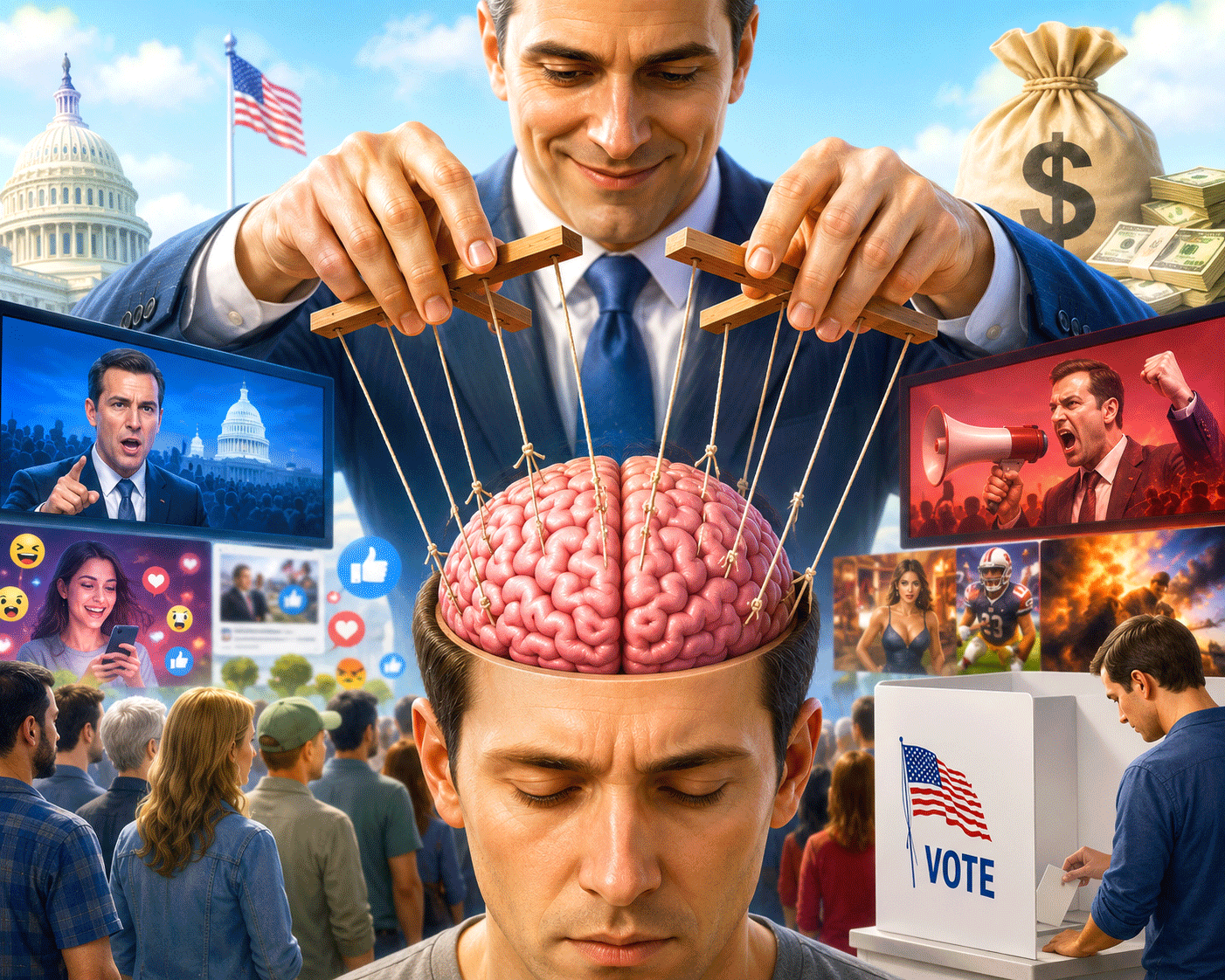
Many elections are won psychologically before they are won politically. Long before a ballot is cast, emotions are stirred, and loyalties are activated.
In many cases, the contest is decided not by who governs best, but by who best controls the narrative and emotions of the public. At times, even accountability is discouraged.
If voters want better leadership, they must first understand how manipulation works. Only then can they break free from it.
THE TWO MINDS OF THE VOTER: RATIONAL VS. EMOTIONAL
Human beings possess both rational and emotional capacities. Wise political judgment depends on balancing the two, especially because campaigns often seek to bypass reason and appeal directly to emotion.
The Limbic System And Emotional Politics
The limbic system is the emotional center of the brain. It is tied to emotions such as fear and anger. Since emotions don’t care about truth, facts, or figures, emotional politics tend to respond quickly before logic and reason have time to engage.
Political campaigns understand this well. Rather than encouraging thoughtful analysis, many intentionally trigger emotional reactions to override rational thinking. An emotional voter reacts instantly. A rational voter examines evidence and asks questions.
HOW EMOTION DEFEATS REASON
- Fear creates urgency.
- Anger creates tribal loyalty.
- Hope creates blind trust.
- Repetition creates perceived truth.
When these emotional forces dominate, voters become easier to manipulate and harder to persuade with facts.
EXCUSES THAT MAINTAIN COMPLACENCY
When elected officials fail to deliver, some excuses become tools of survival:
- “We’re fighting behind the scenes.”
- “The other side stopped us.”
- “We need one more election.”
- “Change takes time.”
- “Trust the process.”
These excuses are usually meant to lower expectations and delay accountability.
TACTICS USED TO WIN RE-ELECTION
Many politicians rely on emotional strategy more than substance.
- Manufactured outrage: Keep voters angry at distractions instead of evident failures.
- Symbolism over substance: Slogans and speeches replace actual results.
- Controlled opposition: Appear to fight while protecting the status quo.
- Small wins, big marketing: Minor actions are sold as historic victories.
THE WARRIOR VS. THE GRANDSTANDER
Voters must learn to recognize two types of leaders – the Warrior and the Grandstander.
The Warrior measures success by outcomes. He uses his authority to protect citizens, solve problems, and take risks for real results.
The Grandstander measures success by applause. He speaks boldly, seeks headlines, performs outrage, but avoids meaningful action. He keeps voters emotional, not informed.
HOW VOTERS BREAK FREE
Citizens regain power when they ask better questions:
- What did they actually accomplish?
- Did they act or only talk?
- Are my emotions being manipulated?
- Am I voting for results or identity?
- Who benefits from my frustration?
FREEDOM REQUIRES SELF-GOVERNMENT
A free society depends on self-governing citizens. But self-government requires emotional discipline. Emotional citizens are easier to manipulate. Rational citizens are harder to control.
Citizens must learn to govern their own minds. To avoid falling prey to the psychological tactics of politics, voters must learn to recognize deception, resist emotional manipulation, and discipline themselves to think rationally rather than react emotionally. Most importantly, they must learn to identify the Warrior and reject the Grandstander.
Author: Joseph Vargas