
 admin
admin
Republicans face a serious responsibility when voting: choosing candidates who will govern with courage and conviction, not merely campaign with polished slogans. In today’s political climate, many Democrats are highly organized, Machiavellian, and ruthless in their pursuit of power. Therefore, the future of Texas depends not on which Republican candidate talks the toughest, but on who will actually take action once elected.
Too often, voters are presented with candidates who know exactly what to say. They speak of liberty, border security, lower taxes, parental rights, faith, and constitutional values. Their speeches are sharp and motivated. But once elected, many fade into the background of politics, offering little more than statements and excuses. This disillusions voters.
For this reason, Republicans must learn to distinguish between the Warrior and the Grandstander.
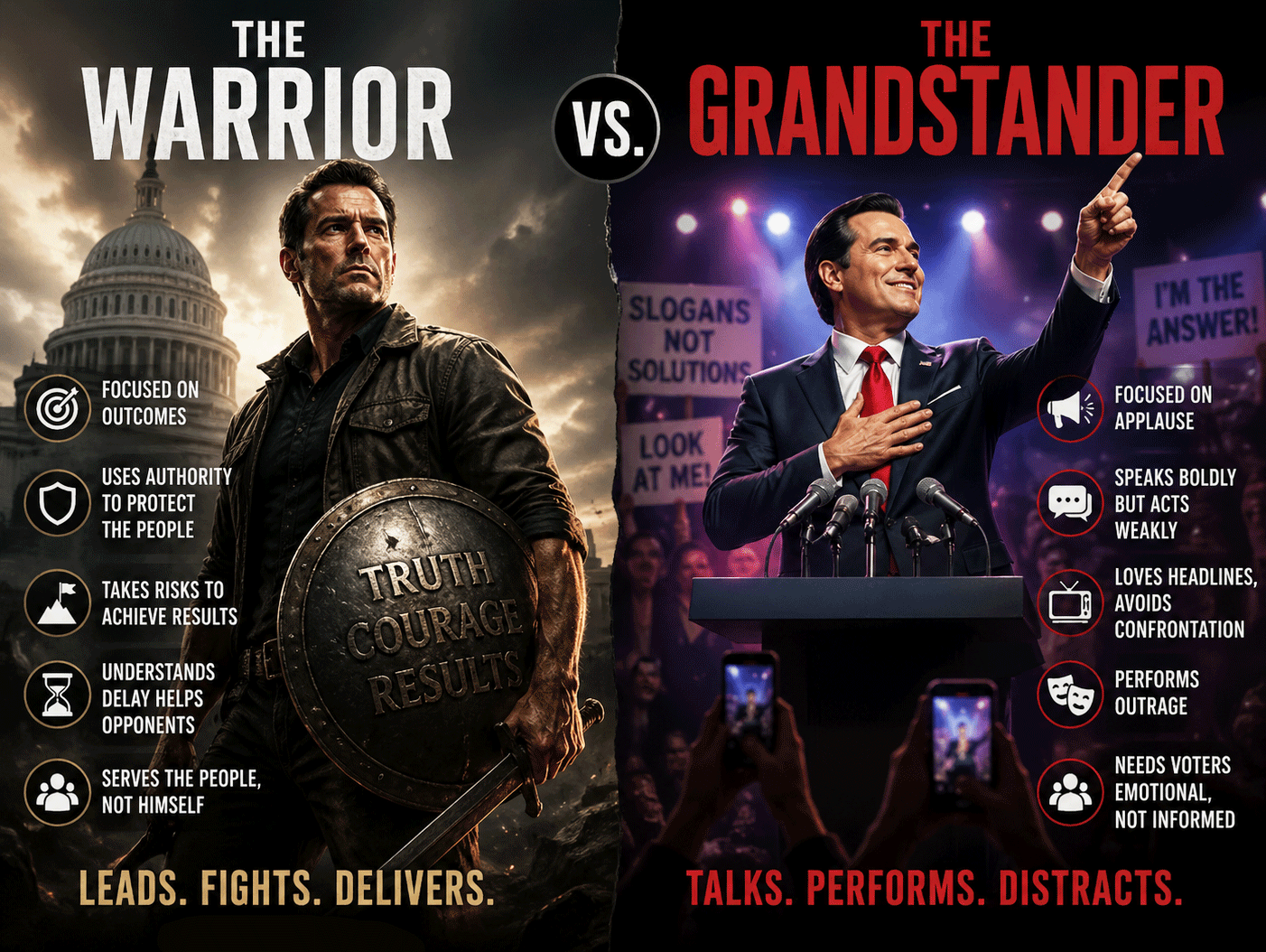
THE WARRIOR REPUBLICAN
A Warrior Republican is not measured by campaign rhetoric, but by courage and results. This is the candidate who understands the real threats facing Texans: rising property taxes, government overreach, attacks on faith and traditional values, border security, inflation, and the erosion of local control. More importantly, he does something about it.
The Warrior files legislation. He votes the right way when it matters. He challenges powerful forces protecting the status quo. He pushes back against lobbyists and special interests. He withstands media attacks. He is willing to be criticized if it means defending the people who elected him.
The Warrior understands that public office is not a trophy; it is a duty. When difficult moments arise, the Warrior does not hide. He acts because he knows what is at stake.
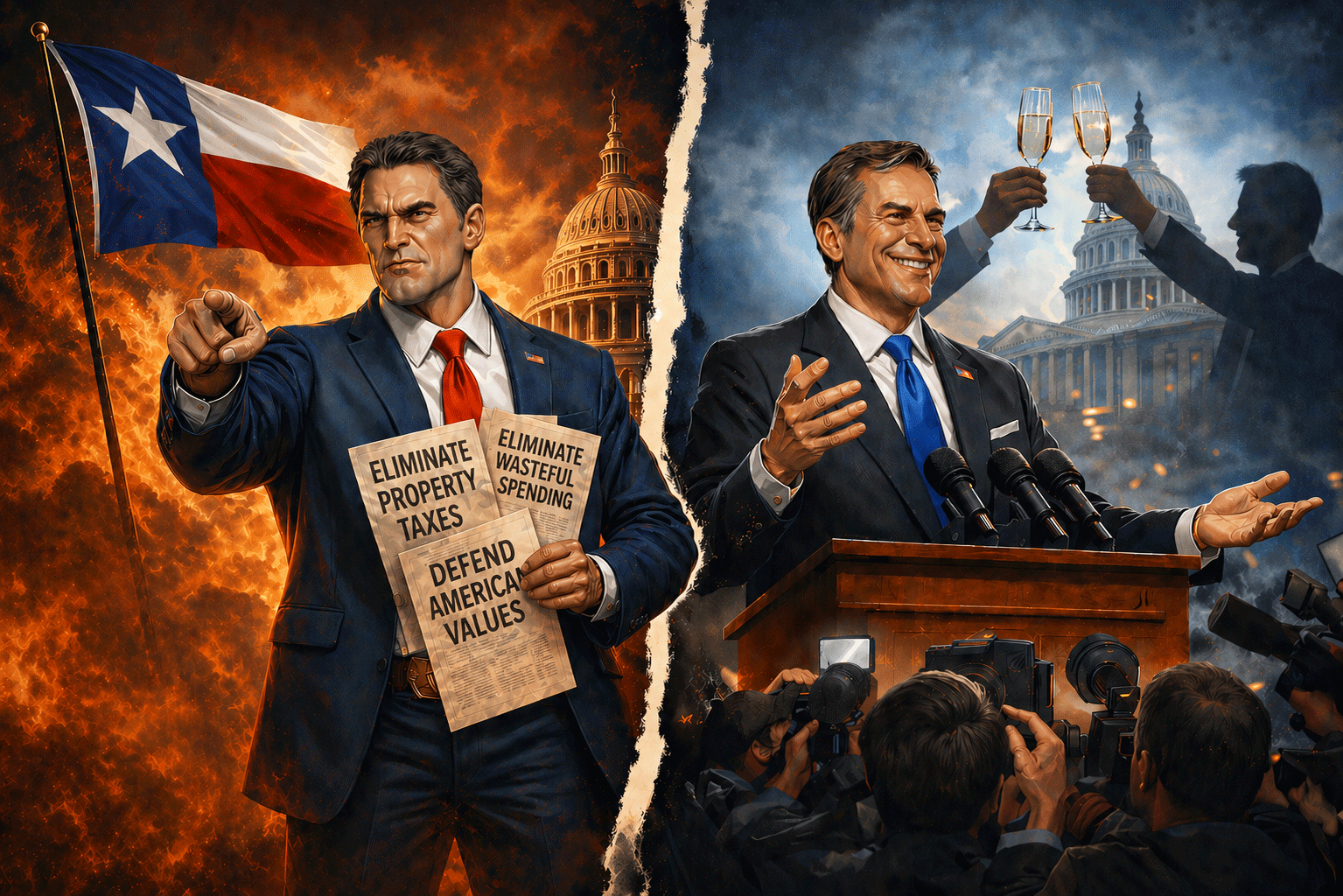
THE GRANDSTANDER REPUBLICAN
Then there is the Grandstander Republican. He says everything voters want to hear but accomplishes little once in office. He campaigns as a fighter but governs as a spectator. He praises conservative values during election season, but is silent when those values need defending in the legislature or local government.
The Grandstander thrives on image over substance. He wants to be seen as strong without paying the price of being strong. He values insider approval more than voter trust. He avoids conflict, delays action, and explains inaction as strategy. The Grandstander tends to gradually develop an entitled mindset, viewing voters as uninformed subjects rather than citizens he was elected to serve.
When challenged, the Grandstander offers phrases like “now is not the time,” “we’re working behind the scenes,” or “it’s more complicated than people understand.” Yet year after year, people see little change – property taxes continue to rise, large corporations continue receiving subsidies, public schools continue pushing ideological agendas, and Democrats continue imposing their priorities.
REPUBLICANS MUST CHOOSE WISELY
As a former Democrat, I can say with certainty that the greatest danger to the conservative movement is being represented by Grandstanders who wear the Republican label while refusing to fight for Republican principles.
Voters should ask every candidate:
- Are you a Warrior or a Grandstander?
- What actions have you taken, not just what words have you spoken?
- Have you stood firm under pressure?
- Have you challenged corruption and waste?
THE FUTURE OF TEXAS DEPENDS ON IT
Texas does not need Grandstanders who can recite talking points. Texas needs Warriors – men and women of conviction who will use their elected position to protect families, liberty, hard-earned income, and the rule of law.
For the sake of Texas children and future generations, voters must demand more than promises. They must demand Warriors who will stand, fight, and deliver results.
Author: Joseph Vargas