
 admin
adminPolitics is often described as a fight between candidates and ideologies. But the deeper battle happens inside the human brain. Every voter processes political information through two competing systems: emotional reaction and rational analysis.
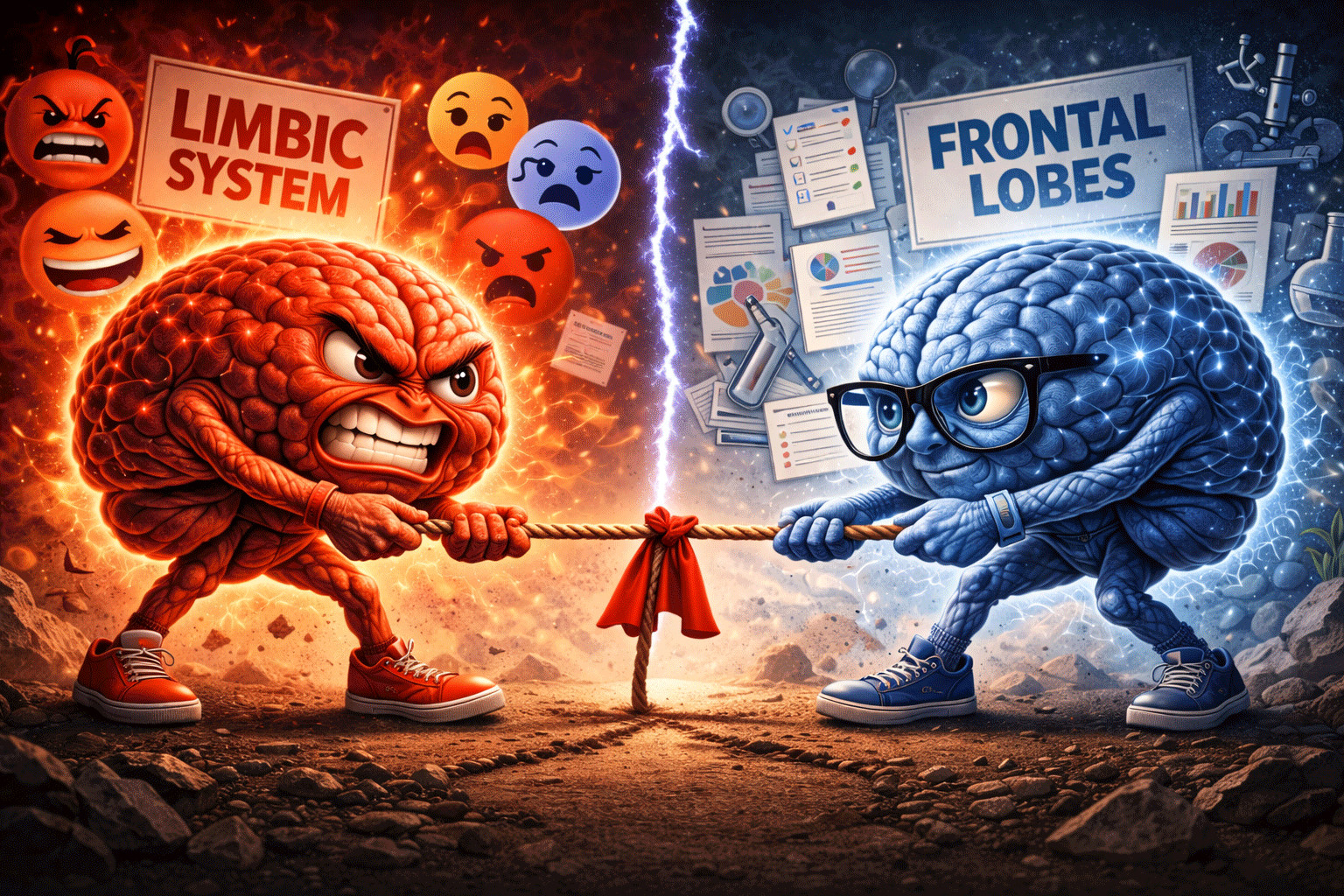
This reflects the difference between rapid emotional processing involving the limbic system of the brain and the critical-thinking, reasoning functions associated with the frontal lobes of the brain, especially the prefrontal cortex.
If we want better political outcomes, we must first understand how the brain reaches conclusions.
The Limbic System: Fast and Emotional
The limbic system is the part of the brain that reacts quickly to emotions such as fear, anger, excitement, and anxiety. It helps us respond fast when something feels threatening or important. That can be useful in real danger, but in politics, it can cause people to react before thinking things through.
As I’ve stated before, “Emotion – be it anger or excitement – impairs judgment and reason.”
Today, campaign ads, viral videos, and angry social media posts often trigger these emotional reactions. When that happens, many people respond with feelings instead of facts:
- “That candidate scares me.”
- “Those people are dangerous.”
- “This headline proves what I already believed.”
- “I’m angry, so I must be right.”
The emotionally-driven limbic system of the brain likely played a major role in the crowd choosing to send Jesus to death while demanding the release of Barabbas.
The limbic system is designed for quick emotional reactions, not careful fact-checking. If emotions are not sent to the frontal lobes – the reasoning part of the brain – for review, they can lead people to false assumptions and wrong conclusions.

The Frontal Lobes: Reason and Judgment
The frontal lobes – especially the prefrontal cortex – are strongly involved in reasoning, impulse control, judgment, and evaluating evidence.
When someone says, “Let me check the facts,” or “Could I be wrong?” they are engaging these higher-order functions.
This part of the brain can interrupt emotional reactions and ask:
- Is this claim true?
- What evidence supports it?
- Is this video edited or misleading?
- Am I being manipulated emotionally?
- What are the long-term consequences of this policy?
The frontal lobes help turn a citizen into a thinker instead of a reactor.
Why Emotion Dominates Politics Today
Modern politics often rewards emotional thinking. Outrage spreads faster than nuance. Tribal fear gets more clicks than facts.
Political strategists and media organizations know this. Social media algorithms definitely know this.
A message that angers you in ten seconds often spreads farther than one requiring ten minutes of thought. As a result, many people reach conclusions emotionally first and then search for facts later to justify them.
That is not critical thinking. It is emotional rationalization.
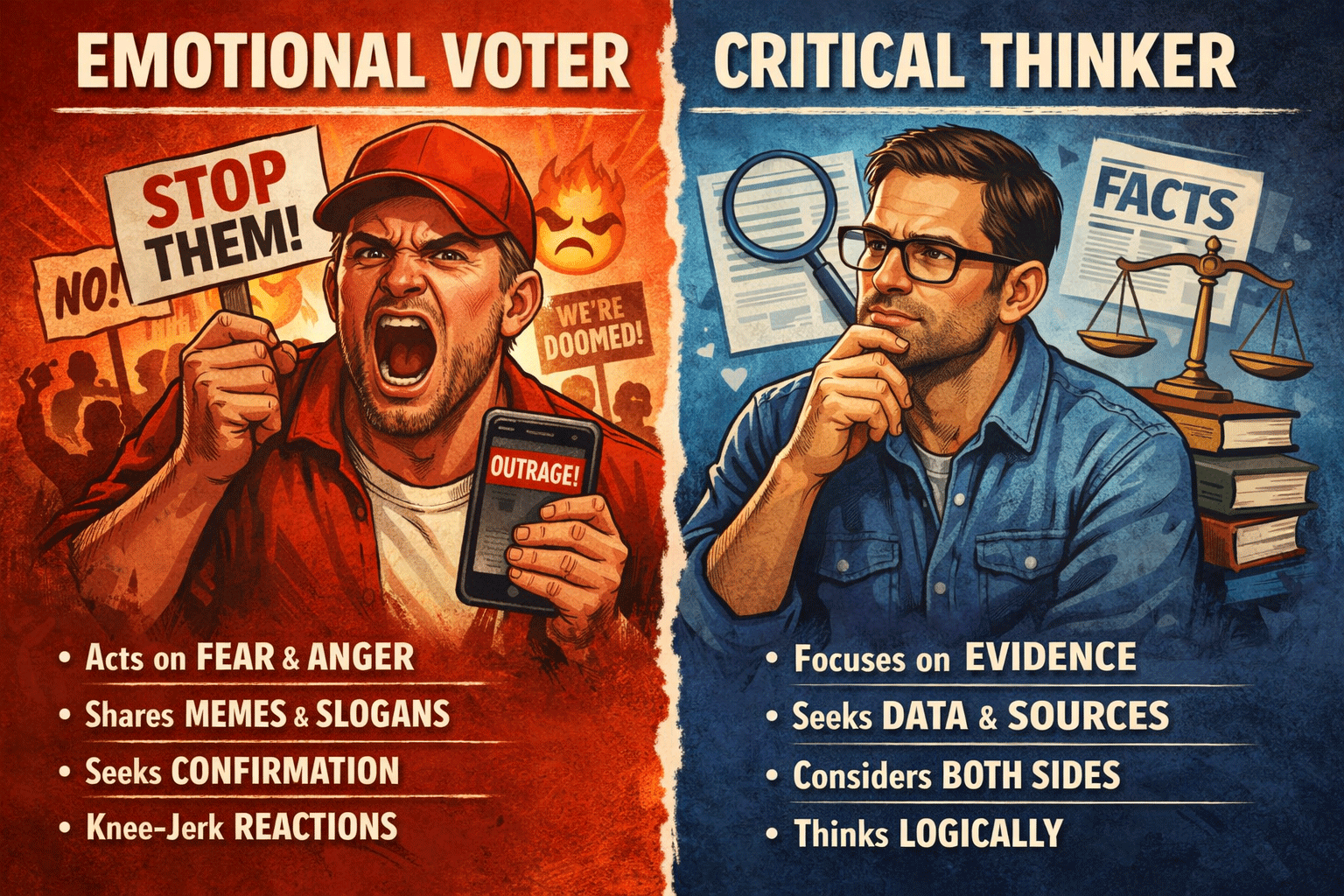
Emotional Thinker vs. Critical Thinker
The emotional thinker asks: “How does this make me feel?”
The critical thinker asks: “Is it true?”
The emotional thinker seeks validation.
The critical thinker seeks accuracy.
The emotional thinker treats disagreement as a threat.
The critical thinker treats disagreement as information to examine.
Emotion can be valuable. It can alert us to injustice or danger. But emotion should inform our judgment, not replace it.
Send It to the Frontal Lobes
Before accepting any political conclusion, pause.
When you feel sudden outrage or fear, ask whether your emotional system reacted first. Then deliberately “send it to the frontal lobes.”
That means:
- Verify the source.
- Check whether facts are missing.
- Examine motives behind the message.
- Separate evidence from emotional packaging.
- Ask if your conclusion would change if the parties were reversed.
This pause is one of the most powerful steps in finding truth.
The Future Belongs to Thinkers
A free society cannot survive on emotional reflex alone. It requires citizens capable of self-government, and self-government requires self-control. Therefore, choose facts over feelings, and reason over reaction. Because the difference between an emotional thinker and a critical thinker is often the difference between being manipulated and being free.
Author: Joseph Vargas