
 admin
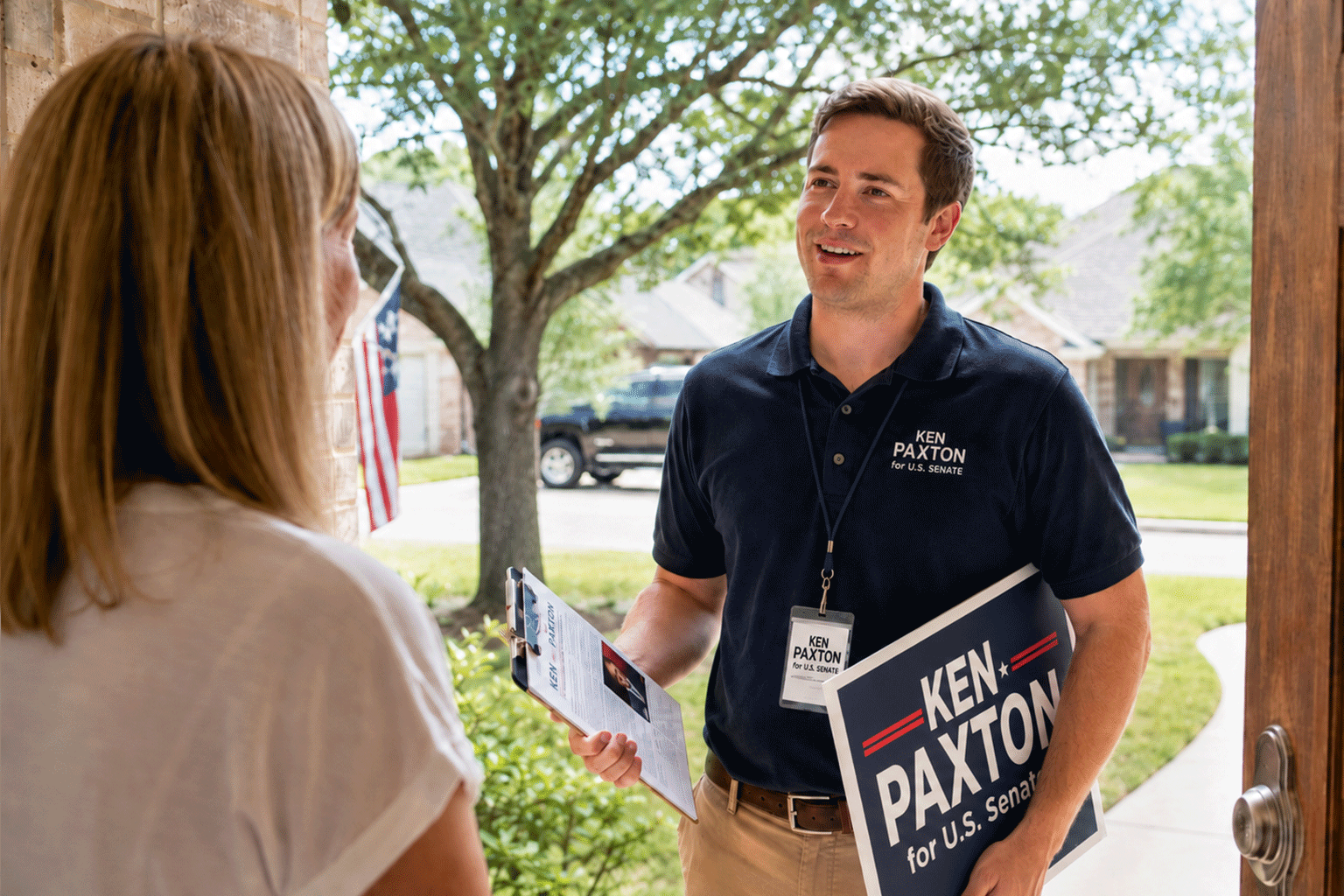
adminCampaigns can spend millions on television, mail, consultants, and digital advertising, but elections still come down to individual voters making decisions. That is why blockwalking remains valuable: it creates something no commercial can replicate – a personal conversation.
For volunteers representing Ken Paxton, the goal should not be to overwhelm voters with talking points or argue with anyone who disagrees. The goal should be to listen, identify what matters to the voter, provide verifiable information, and leave the voter with a clear understanding of what is at stake in the U.S. Senate race.
ASK BEFORE YOU TELL
One of the biggest mistakes a blockwalker can make is beginning with a speech. Start instead with a question:
“What issue matters most to you in this election?”
Then listen.
Once you know the voter’s concern, organize the conversation around three factual areas:
1. Paxton’s documented record in public office.
Rather than relying only on campaign promises, volunteers can point to actions Paxton took as Texas attorney general:
His office sued the Biden administration over congressionally appropriated border wall money and later announced a final victory after the administration declined to appeal the court order requiring the funds to be used as appropriated.
His office also defended Texas abortion restrictions in State v. Zurawski, where the Texas Supreme Court vacated a lower-court injunction.
Paxton also successfully challenged enforcement of part of the 2023 federal omnibus spending law on constitutional quorum grounds.
These are concrete examples voters can examine for themselves. These cases also document a recurring feature of Paxton’s tenure as attorney general: using litigation as a tool to challenge federal action and defend Texas statutes.
2. The responsibilities and powers of the office he is seeking.
A U.S. senator does much more than vote on headline-grabbing bills.
Senators vote on federal laws, spending, amendments, nominations, and other measures. They also confirm or reject Supreme Court justices, federal judges, cabinet officials, ambassadors, and other presidential nominees. Federal judicial appointments can be especially consequential because judges generally receive life tenure. The Senate also has constitutional responsibilities involving treaties and impeachment trials.
A useful question for voters is: “Who do you want casting Texas’ vote when those decisions come before the Senate?”
3. Direct comparisons of the candidates’ stated positions.
Keep these comparisons factual and sourced.
Paxton’s campaign supports completing the border wall, stronger immigration enforcement, defending the unborn, protecting gun and parental rights, and opposing transgender participation in girls’ sports.
Talarico’s campaign supports creating legalization or citizenship pathways for certain undocumented immigrants; codifying Roe v. Wade; protecting contraception, IVF, same-sex marriage, and LGBTQ rights; and limiting what he considers government interference in private personal decisions.
The strongest blockwalker does not exaggerate the differences; he or she explains the candidates’ stated positions accurately.
DO NOT BECOME DEFENSIVE
A major psychological hurdle is rejection. Some voters will dislike Paxton personally. Others will strongly disagree with him politically. A volunteer who interprets that disagreement as a personal attack can quickly become defensive.
Do not turn the conversation into an argument.
Acknowledge the concern and redirect toward substance:
“I understand. When you decide how to vote, which policies or responsibilities of the office matter most to you?”
This lowers the emotional temperature and moves the conversation from personalities to governing consequences.
DO NOT TRY TO WIN EVERY DOOR
Another psychological trap is believing every conversation must end with agreement. It will not. Some voters are firmly decided. Others do not want to talk.
Respect them.
Success should be measured by quality contacts, useful conversations, accurate information shared, and questions identified; not by winning arguments. A respectful departure can be more valuable than another five minutes of debate.
EVERY DOOR MATTERS
Blockwalking is retail politics at its most basic. Be prepared. Know the record. Know the powers of the Senate. Know both candidates’ stated positions. Carry source material or links voters can verify themselves. Never repeat a claim you cannot substantiate.
Most importantly, remember that the voter at the door is not an obstacle to overcome. The voter is the decision-maker. Treat that person with respect, give them accurate information, and allow them to evaluate the differences for themselves.
Author: Joseph Vargas